The Human Design Center of Self in Children
Understanding Identity, Direction, Love, and Being Themselves
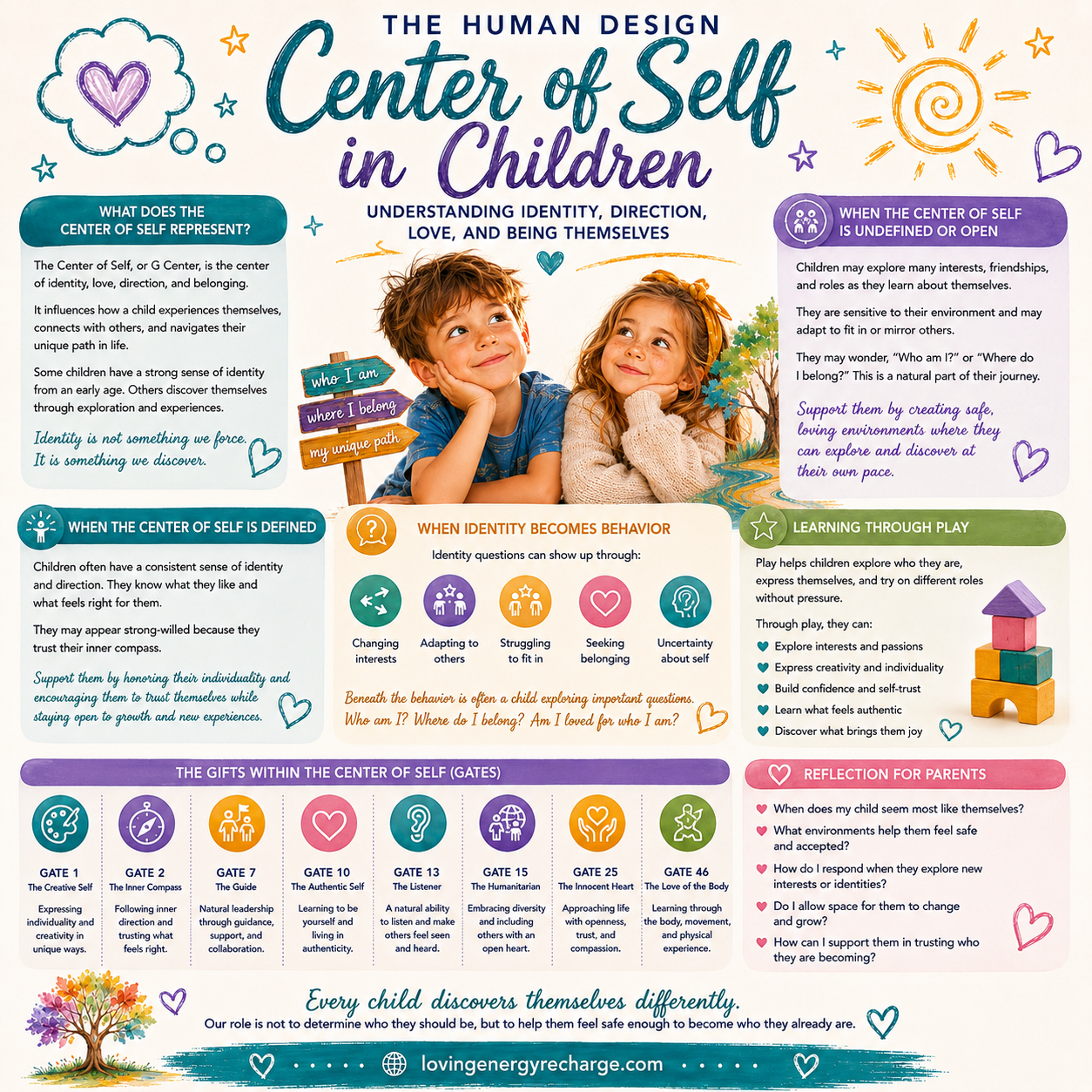
One of the most beautiful—and sometimes challenging—parts of parenting is watching a child discover who they are.
From a very young age, children begin showing us pieces of themselves. We see it in the clothes they want to wear, the games they enjoy playing, the friendships they gravitate toward, and the interests that light them up. Some children seem to know exactly who they are from the beginning. Others move through many different phases as they explore the world around them and learn more about themselves.
As parents, we naturally want our children to feel confident, accepted, and secure in who they are. We want them to know they are loved. We want them to feel like they belong. We want them to trust themselves as they grow. Yet there are moments when we may find ourselves wondering why one child seems so certain about who they are while another constantly changes interests. Why some children easily find their place in the world while others seem to be searching for where they belong.
Through the lens of Human Design, the Center of Self offers a compassionate way of understanding how a child experiences identity, love, direction, and belonging. Rather than focusing on who a child should become, this center invites us to recognize who they already are beneath expectations, comparisons, and conditioning.
Understanding this center is not about defining a child's future. It is about creating space for them to discover themselves.
What Does the Center of Self Represent?
The Center of Self, often called the G Center in Human Design, is the center of identity, love, direction, and belonging. This center is connected to a child's sense of self and their unique path through life. It influences how they experience love, how they connect with others, and how they navigate the journey of becoming who they are.
For some children, this may show up as a strong sense of identity and direction. For others, it may appear as an ongoing exploration of who they are and where they belong. The Center of Self reminds us that identity is not something we force. It is something we discover.
Children are not meant to arrive in the world already knowing exactly who they are. They are meant to explore, experience, and grow into themselves over time.
Sometimes our greatest role as parents is not teaching our children who to be. It is creating a safe space for them to become who they already are.
When the Center of Self Is Defined
Children with a defined Center of Self often carry a more consistent sense of identity. From an early age, they may have strong preferences, clear interests, and a natural sense of what feels right for them. There is often a steadiness in the way they experience themselves, even as they grow and mature.
You may notice a child who confidently shares what they like and dislike, who naturally gravitates toward certain activities, or who seems to trust their own inner compass when making choices.
These children often have a reliable sense of direction moving through them. This does not mean they always know what comes next, but there is frequently an underlying feeling of being connected to themselves. At times, they may appear stubborn when others try to push them toward something that does not feel aligned. More often than not, they are simply following what feels true for them.
Supporting a defined Center of Self often means honoring their individuality. They benefit from being encouraged to trust themselves while also learning that growth and new experiences can expand their understanding of who they are.
When children feel accepted for who they naturally are, their confidence tends to grow from the inside out.
When the Center of Self Is Undefined or Open
Children with an undefined Center of Self often experience identity differently. Rather than carrying a fixed sense of who they are, they may naturally explore many different ways of being.
One season they may love soccer. The next they may become fascinated by art. Their friend groups may change. Their interests may evolve. Their style, preferences, and passions may shift as they gather experiences and learn more about themselves. This is not inconsistency. It is exploration. These children often learn about themselves through the people they meet, the places they go, and the experiences they have. Because they are sensitive to their environment, they may sometimes adapt to fit in or absorb qualities from the people around them. At times they may wonder where they belong or who they truly are.
The beautiful gift within this openness is their ability to experience many different perspectives and ways of being.
Supporting these children often begins with helping them understand that they do not need to rush toward a fixed identity. They are not meant to become one thing. They are meant to discover themselves through the journey. The environments they spend time in can have a profound impact on how they feel. When they are surrounded by people who accept them and spaces where they feel safe, their natural gifts often flourish.
When Identity Becomes Behavior
Children do not always express questions about identity through words. Sometimes these questions show up through behavior. A child may constantly change interests, friendships, or hobbies. Another may become highly influenced by the people around them. Some children may struggle with fitting in, while others may work very hard to stand out.
You may notice a child trying different versions of themselves as they search for where they belong. At times they may appear uncertain, resistant, overly concerned about friendships, or deeply affected by social dynamics.
Beneath these behaviors is often a child exploring important questions.
Who am I?
Where do I belong?
Am I loved for who I am?
These questions are a natural part of human development. When we begin viewing these behaviors through the lens of self-discovery rather than correction, we create space for children to develop a healthier relationship with themselves.
Sometimes they do not need advice. Sometimes they need acceptance.
Learning Through Play
Play is one of the most powerful ways children discover who they are. Through play, children experiment with different roles, explore their interests, express their creativity, and learn what feels authentic to them. One day they may pretend to be an artist. The next day an explorer. The next a teacher, athlete, scientist, or musician. Each experience becomes a piece of the puzzle.
Children with strong Center of Self energy often enjoy activities that allow self-expression and individuality. Children with an open Center of Self often benefit from opportunities to explore a variety of interests without pressure to choose who they are too quickly.
Creative activities, imaginative play, storytelling, movement, art, music, nature exploration, and social experiences all help children learn more about themselves. The goal is not to help children find one identity. The goal is to help them feel safe exploring many possibilities.
The Gifts Within the Center of Self
While the Center of Self represents identity and direction as a whole, the gates within this center offer additional insight into the unique qualities a child may naturally embody. Each gate expresses a different aspect of love, identity, contribution, and self-discovery.
Gate 1 — The Creative Self
Children with Gate 1 often possess a strong desire to express their individuality and creativity. They may be drawn toward art, music, storytelling, design, or other forms of self-expression that allow them to share their unique perspective. These children often flourish when they feel free to create without comparison or judgment. Their gift is not in being like everyone else—it is in expressing what makes them uniquely themselves.
Gate 2 — The Inner Compass
Children with Gate 2 often possess a natural sense of direction. While they may not always know exactly where they are going, they often have an intuitive awareness of what feels right for them. They tend to move through life by following what naturally calls to them. Supporting these children often means helping them trust their instincts and honoring their unique path.
Gate 7 — The Guide
Children with Gate 7 often demonstrate natural leadership qualities. They may enjoy organizing games, helping others, or bringing people together. Their leadership tends to emerge through guidance and collaboration rather than control. These children often teach us that leadership begins with listening.
Gate 10 — The Authentic Self
Children with Gate 10 are often here to learn the importance of being themselves. They may have a strong desire to live authentically and can be deeply affected when they feel pressured to be someone they are not. Their greatest gift emerges when they learn that who they are is already enough.
Gate 13 — The Listener
Children with Gate 13 often possess a natural ability to listen. Others may feel comfortable sharing their stories with them, even from a young age. These children often carry a quiet wisdom and compassion that helps others feel seen and understood.
Gate 15 — The Humanitarian
Children with Gate 15 often have a deep appreciation for diversity and humanity. They may be naturally accepting of differences and possess a strong desire to include others. These children often remind us that there is beauty in every unique way of being.
Gate 25 — The Innocent Heart
Children with Gate 25 often approach life with openness, innocence, and trust. They may possess a naturally loving heart and a deep capacity for compassion. Their gift lies in reminding others of the power of unconditional love.
Gate 46 — The Love of the Body
Children with Gate 46 often learn through direct experience and connection with their physical bodies. They may enjoy movement, hands-on activities, outdoor adventures, sports, dancing, building, or exploring the world through action rather than observation alone.
These children often discover who they are by participating fully in life. Supporting this gift means encouraging healthy movement, physical exploration, and helping them develop appreciation for their bodies and all they are capable of doing. Through these experiences, they learn to trust themselves and engage with life more fully.
Reflection for Parents
As you reflect on your child's relationship with identity, belonging, and self-expression, consider:
When does my child seem most like themselves?
What environments help them feel safe and accepted?
How do I respond when they explore new interests or identities?
Do I allow space for them to change and grow?
How can I support them in trusting who they are becoming?
Every Child Discovers Themselves Differently
Some children seem to know who they are from the beginning.
Some discover themselves through friendships.
Some through creativity.
Some through adventure.
Some through years of exploration and growth.
The purpose of understanding your child's Center of Self is not to define them. It is to recognize that every child is on their own unique journey of becoming.
When children feel loved for who they are rather than who they should be, they begin developing something far more powerful than confidence. They develop trust in themselves. And from that trust, their unique path naturally begins to unfold.
Much Love,
Lisa Richard
Important Note
This article was created with the support of artificial intelligence (ChatGPT) and reviewed as part of the Children Feel Energy Too educational series. The information shared is intended for educational, self-awareness, and personal reflection purposes only. Human Design is not a diagnostic, medical, psychological, or therapeutic system and should not be used as a substitute for professional advice, diagnosis, or treatment.
Every child is unique. Parents, caregivers, and educators are encouraged to use discretion when interpreting the information provided and to consider the individual needs, experiences, and developmental stage of each child. If you have concerns regarding your child's emotional, mental, physical, behavioral, or developmental well-being, please consult with a qualified healthcare professional, pediatrician, psychologist, counselor, or other licensed practitioner.

About Lisa Richard
Lisa Richard is a Human Design Guide, certified Reiki Master Teacher, Emotion Code Practitioner, Ancestral Healer, Lightworker Coach, Intuitive Channel, and Oracle Card Reader with a passion for helping individuals better understand themselves and the unique way they experience the world.
Married to her soulmate over 29 years, Lisa is the proud mother of three adult daughters and grandmother to two young grandchildren. Her experiences as both a parent and grandparent continue to deepen her appreciation for the individuality, sensitivity, and natural wisdom that children carry.
Through her work with Human Design, Lisa helps parents gain a deeper understanding of their child's unique energetic makeup, strengths, sensitivities, learning style, and emotional needs. She believes that when children feel seen, understood, and supported for who they naturally are, they develop greater confidence, self-awareness, and trust in themselves.
Lisa's approach blends intuitive insight with practical guidance, creating a compassionate space for self-discovery, growth, and deeper connection between parents and their children.
To explore Human Design readings, personalized child and family sessions, energy healing services, courses, workshops, and other offerings, please visit our website. We would be honored to support you on your journey of self-discovery, healing, and deeper understanding.
Visit: lovingenergyrecharge.com
