The Human Design Root Center in Children
Understanding Stress, Pressure, Momentum, and Moving at Their Own Pace
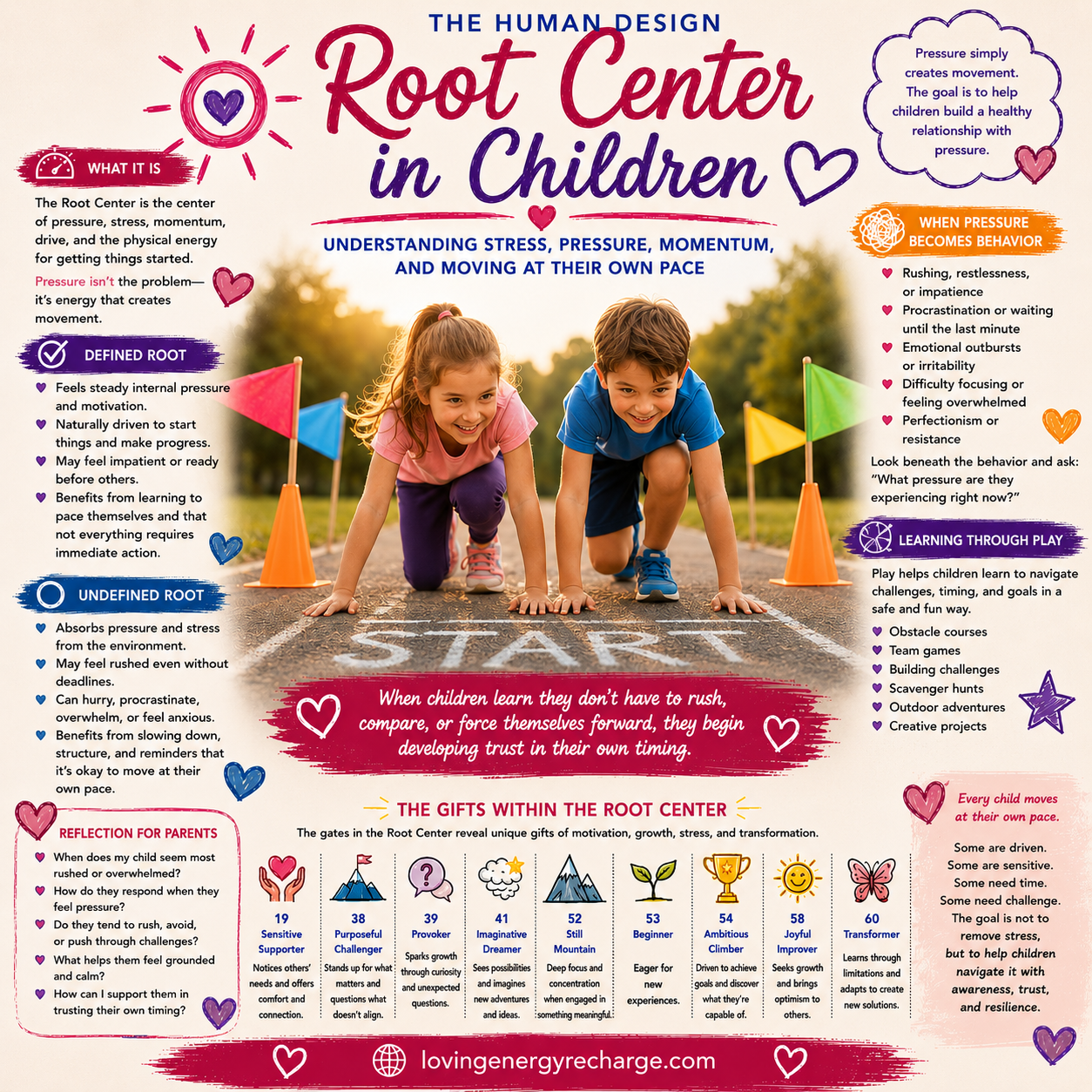
Children experience pressure long before they understand what pressure is. Sometimes it shows up as excitement and eagerness. Other times it appears as frustration, restlessness, overwhelm, urgency, or emotional outbursts. A child may rush through activities, become impatient while waiting, or seem unable to sit still when something feels unfinished.
As parents, it can be easy to assume that all children experience pressure in the same way. Yet some children seem naturally driven to keep moving, accomplishing, and doing. Others become overwhelmed when life feels rushed or demanding. Some children thrive under challenge, while others need more time and space to move at their own rhythm.
Through the lens of Human Design, the Root Center offers a compassionate way of understanding how children experience pressure, stress, motivation, and momentum. Rather than viewing pressure as something negative, the Root Center reminds us that pressure is simply energy seeking movement. Like a seed pushing through the soil toward sunlight, pressure can create growth, movement, creativity, and action. The challenge is not the pressure itself. The challenge is learning how to work with it.
Understanding this center is not about removing stress from a child's life. It is about helping them develop a healthy relationship with pressure so they can learn to move through life without feeling controlled by it. When children learn that they do not need to rush, compare, or force themselves forward, they begin developing trust in their own timing.
What Does the Root Center Represent?
The Root Center is the center of pressure, stress, momentum, drive, and physical energy for getting things started. This center influences how a child experiences deadlines, expectations, urgency, excitement, and the pressure to act.
Some children naturally carry a steady relationship with pressure and often feel motivated to take action. Others may be highly sensitive to pressure around them and can easily absorb stress from family members, teachers, siblings, or their environment.
The Root Center reminds us that pressure itself is not the problem. Pressure simply creates movement. The question becomes whether a child is moving from inspiration and readiness—or reacting from stress and urgency. When children learn to recognize the difference, they begin developing greater self-awareness and resilience.
When the Root Center Is Defined
Children with a defined Root Center often experience pressure and momentum in a more consistent way. These children may naturally feel driven to start projects, take action, solve problems, or keep moving toward something that interests them. They often carry a steady internal pressure that helps create movement and progress.
You may notice a child who likes to stay busy, who enjoys challenges, or who feels energized when working toward a goal. At times, they may appear impatient when things move too slowly. They may feel ready to begin before others are prepared or become frustrated when obstacles delay progress.
Supporting these children often means helping them pace themselves and recognize that not every situation requires immediate action. When they learn to work with their natural momentum rather than letting it control them, they often develop tremendous resilience, determination, and confidence.
When the Root Center Is Undefined or Open
Children with an undefined or open Root Center often experience pressure differently. Rather than generating consistent pressure from within, they tend to amplify and absorb pressure from the world around them. These children may feel rushed even when no deadline exists. They may absorb stress from parents, teachers, siblings, or busy environments and feel compelled to act simply to relieve the pressure they are experiencing.
You may notice a child who hurries through tasks, becomes overwhelmed when multiple things are happening at once, or feels anxious when expectations feel unclear. At times, they may rush to finish something simply so the pressure will go away.
Supporting these children often means helping them slow down and recognize that not every pressure needs an immediate response. They benefit from reassurance, structure, and reminders that it is okay to move at their own pace. When children with an undefined Root Center learn to separate their own energy from the pressure around them, they often develop remarkable awareness and emotional resilience.
When Pressure Becomes Behavior
Children do not always express stress through words. Sometimes pressure shows up through behavior. A child may rush through homework. Another may become frustrated when plans change. Some children may procrastinate until the last minute and then suddenly become highly motivated. Others may become overwhelmed by too many expectations and struggle to know where to begin. You may notice restlessness, irritability, emotional outbursts, difficulty focusing, perfectionism, or resistance.
Beneath many of these behaviors is often a child attempting to manage pressure. Instead of asking: "Why are they rushing?" or "Why won't they start?" We might ask: "What pressure are they experiencing right now?" That question often reveals far more than the behavior itself.
Learning Through Play
Play helps children develop a healthy relationship with pressure. Games naturally introduce challenges, timing, goals, problem-solving, and opportunities to navigate both success and frustration. Through play, children learn that pressure does not need to feel threatening. Obstacle courses, building challenges, scavenger hunts, team games, outdoor adventures, creative projects, and open-ended problem-solving activities can all help children explore pressure in a safe and enjoyable way.
Children with strong Root energy often benefit from opportunities for movement and challenge. Children with an undefined Root often benefit from activities that allow them to practice slowing down, pacing themselves, and finding calm within movement. The goal is not to eliminate pressure. The goal is to help children learn that they are capable of moving through it.
The Gifts Within the Root Center
While the Root Center represents pressure and momentum as a whole, the gates within this center offer additional insight into the unique ways a child may experience motivation, growth, stress, and transformation.
Gate 19 — The Sensitive Supporter
Children with Gate 19 are often highly sensitive to the needs of others. They may naturally notice when someone requires support, comfort, or connection.
Gate 38 — The Purposeful Challenger
Children with Gate 38 often possess determination and a desire to stand up for what feels meaningful. They may naturally question things that do not feel aligned with their values.
Gate 39 — The Provoker
Children with Gate 39 often spark growth through curiosity and challenge. They may ask unexpected questions or encourage others to look at things differently.
Gate 41 — The Imaginative Dreamer
Children with Gate 41 often possess rich imaginations and a natural ability to envision possibilities, adventures, and new experiences.
Gate 52 — The Still Mountain
Children with Gate 52 often carry a gift for concentration and focus. When engaged in something meaningful, they may have an incredible ability to remain present and attentive.
Gate 53 — The Beginner
Children with Gate 53 often enjoy new beginnings. They may become excited about starting projects, exploring opportunities, and initiating new experiences.
Gate 54 — The Ambitious Climber
Children with Gate 54 often possess natural drive and motivation. They may enjoy working toward goals and discovering what they are capable of achieving.
Gate 58 — The Joyful Improver
Children with Gate 58 often carry enthusiasm for growth, learning, and improvement. They naturally seek ways to make things better and often bring optimism to those around them.
Gate 60 — The Transformer
Children with Gate 60 often learn valuable lessons through limitations and challenges. They may discover creative ways to adapt when things do not go according to plan.
Reflection for Parents
As you reflect on your child's relationship with pressure and stress, consider:
When does my child seem most rushed or overwhelmed?
How do they respond when they feel pressure?
Do they tend to rush, avoid, or push through challenges?
What helps them feel grounded and calm?
How can I support them in trusting their own timing?
Every Child Moves at Their Own Pace
Some children are naturally driven.
Some are highly sensitive to pressure.
Some thrive on challenge.
Some need extra space and reassurance.
Some move quickly.
Some move slowly.
The purpose of understanding your child's Root Center is not to eliminate stress from their lives. It is to help them develop a healthier relationship with it.
When children learn that pressure does not have to control them, that they do not need to rush to keep up, and that their timing matters, they begin developing something incredibly valuable. Trust in their own pace. And from that trust, resilience naturally begins to grow.
Much Love,
Lisa Richard
Important Note
This article was created with the support of artificial intelligence (ChatGPT) and reviewed as part of the Children Feel Energy Too educational series. The information shared is intended for educational, self-awareness, and personal reflection purposes only. Human Design is not a diagnostic, medical, psychological, or therapeutic system and should not be used as a substitute for professional advice, diagnosis, or treatment.
Every child is unique. Parents, caregivers, and educators are encouraged to use discretion when interpreting the information provided and to consider the individual needs, experiences, and developmental stage of each child. If you have concerns regarding your child's emotional, mental, physical, behavioral, or developmental well-being, please consult with a qualified healthcare professional, pediatrician, psychologist, counselor, or other licensed practitioner.

About Lisa Richard
Lisa Richard is a Human Design Guide, certified Reiki Master Teacher, Emotion Code Practitioner, Ancestral Healer, Lightworker Coach, Intuitive Channel, and Oracle Card Reader with a passion for helping individuals better understand themselves and the unique way they experience the world.
Married to her soulmate over 29 years, Lisa is the proud mother of three adult daughters and grandmother to two young grandchildren. Her experiences as both a parent and grandparent continue to deepen her appreciation for the individuality, sensitivity, and natural wisdom that children carry.
Through her work with Human Design, Lisa helps parents gain a deeper understanding of their child's unique energetic makeup, strengths, sensitivities, learning style, and emotional needs. She believes that when children feel seen, understood, and supported for who they naturally are, they develop greater confidence, self-awareness, and trust in themselves.
Lisa's approach blends intuitive insight with practical guidance, creating a compassionate space for self-discovery, growth, and deeper connection between parents and their children.
To explore Human Design readings, personalized child and family sessions, energy healing services, courses, workshops, and other offerings, please visit our website. We would be honored to support you on your journey of self-discovery, healing, and deeper understanding.
Visit: lovingenergyrecharge.com
